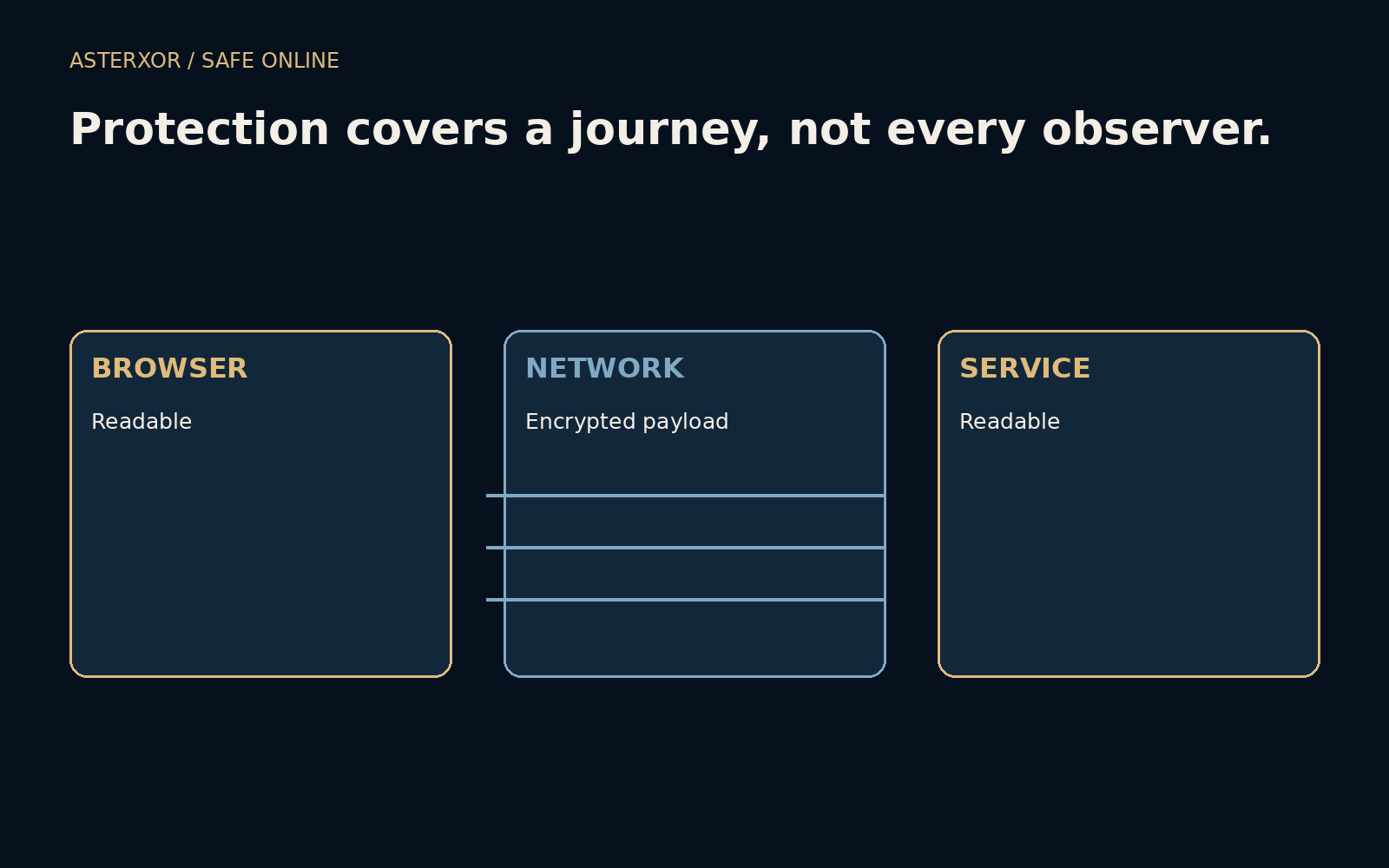
Hidden from whom is a more useful question than simply hidden?
HTTPS protects communication between a client and a service using TLS. That protection is important, but it has boundaries. The browser must understand the page it displays, and the destination service must process the request it receives. An observer along the network path has a different view from either endpoint. A three-part diagram helps keep those perspectives separate.
Encryption has a boundary. So does every claim about visibility.
The protected part is the exchange along the path
For a correctly validated HTTPS connection with uncompromised endpoints and no authorized interception, ordinary network observers cannot simply read the request path, query or body as plain HTTP text. TLS also provides protection against undetected changes to the protected exchange. Browser certificate checks help establish the connection to the expected hostname under the certificate system’s rules.
Those assumptions are doing real work. A compromised device, an intentionally installed inspection system or a certificate warning that somebody bypasses changes the situation. We did not create a connection or inspect packets. The exercise starts with a declared normal HTTPS arrangement and asks how to describe its visibility without claiming more than that arrangement supplies.
The browser and the service still need the content
Your browser decrypts the information required to display the page. Depending on permissions and architecture, software on the device may interact with it too. The receiving service processes submitted content and can retain logs or other records according to its systems and policies. Transport encryption does not hide a message from the party to which you deliberately send it.
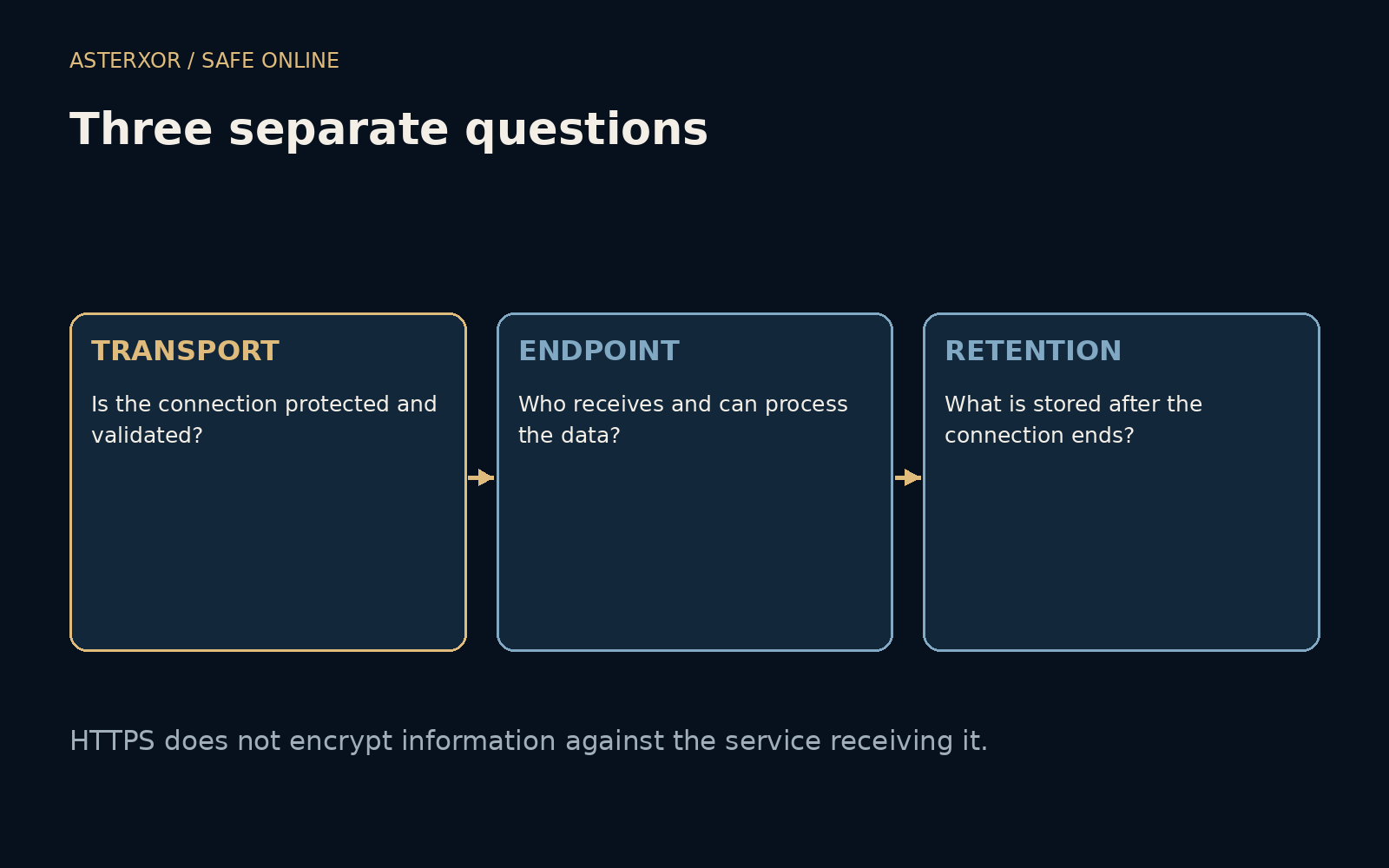
This distinction matters when choosing where to enter personal information. A secure connection can deliver data faithfully to an organization you would rather not share it with. The organization’s purpose, access controls, retention practices and onward sharing deserve their own assessment. A connection indicator cannot answer all those questions because they concern what happens at and after the endpoint.
The network can still observe context
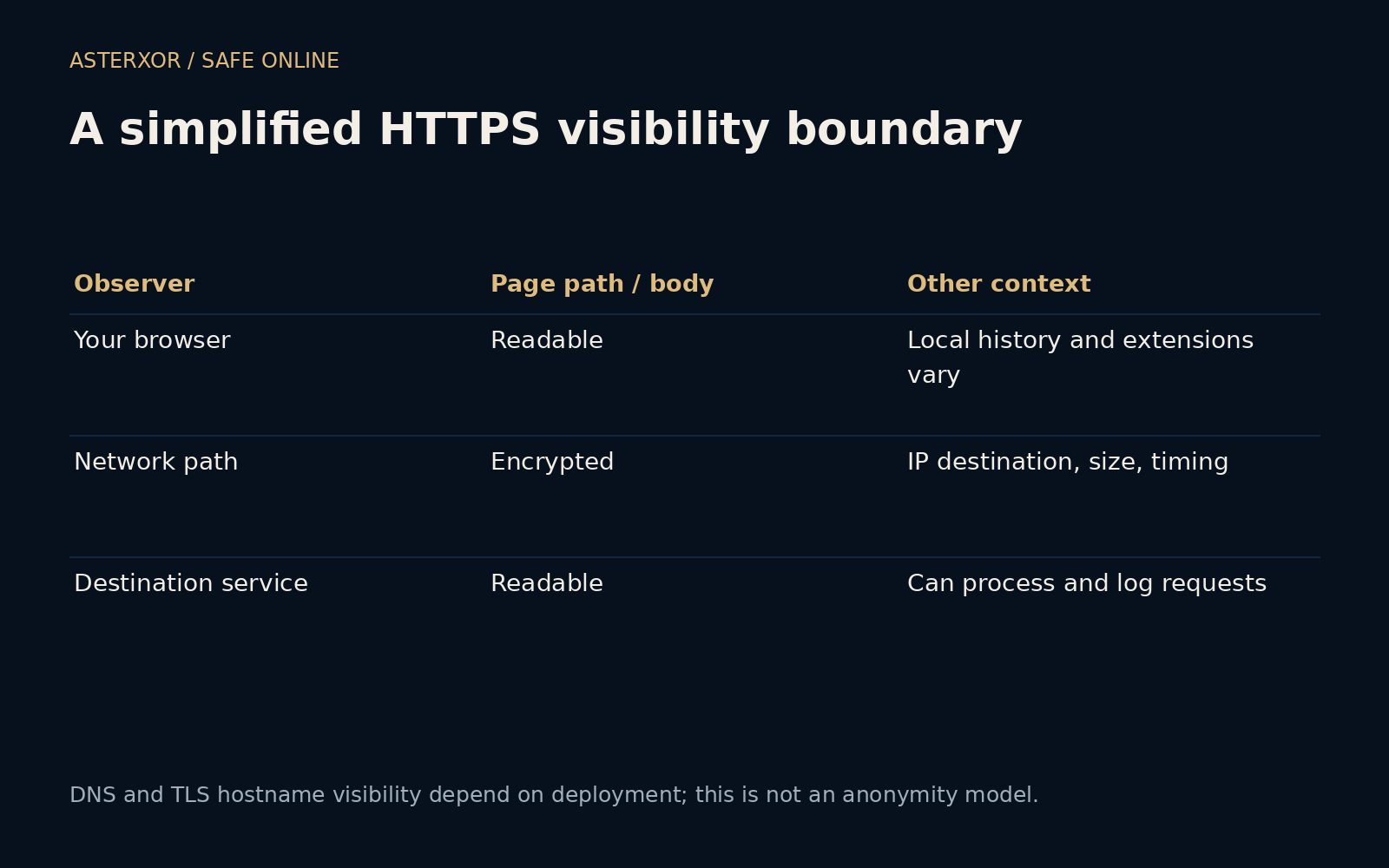
An ordinary network path can observe destination IP addresses, packet sizes and timing even when application content is encrypted. Those facts do not directly reveal every page or message, but they can provide context. How much hostname information is visible depends on details such as DNS transport, TLS configuration and whether encrypted client hello is supported and used.
Avoid treating a simplified diagram as a promise of anonymity. Encrypted DNS can change who observes DNS queries, and a VPN changes which parts of the path see particular connections. Neither makes every observer disappear. The right question names an observer and a piece of information: can this network see the page body, the destination address or the timing?
Our local check is a map of claims
The script contains a small visibility matrix for three roles: browser, network path and destination service. Five assertions confirm that browser and service can read content in the model, that the network cannot read the protected path, and that destination information and timing remain in its view. These are consistency checks on a diagram’s stated assumptions.
No TLS implementation was tested, no traffic was captured and no real network was monitored. The matrix leaves out many deployment details deliberately. Its value is editorial: it prevents the word encrypted from silently expanding into invisible everywhere. If a particular workplace, browser or provider arrangement matters, its actual configuration needs a separate examination.
Use the protection without asking it to do every job
Keep browser connection checks enabled and stop at unexpected security warnings rather than dismissing them because a page says it is normal. Use a verified route to important services, keep software updated and consider whether the destination needs the information requested. These choices complement HTTPS; they address different parts of the act of sharing.
After submitting information, remember that ending the connection does not erase what the recipient already received. Account records, server logs, downloaded copies and local history have their own lifetimes. If your concern is retention or deletion, look for the relevant service controls and policy. A protected journey is valuable precisely when its limits remain clear enough to guide the next decision.
Further reading
RFC 8446: TLS 1.3 ↗MDN: Transport Layer Security ↗RFC 9849: TLS Encrypted Client Hello ↗Original documentation and useful background.